
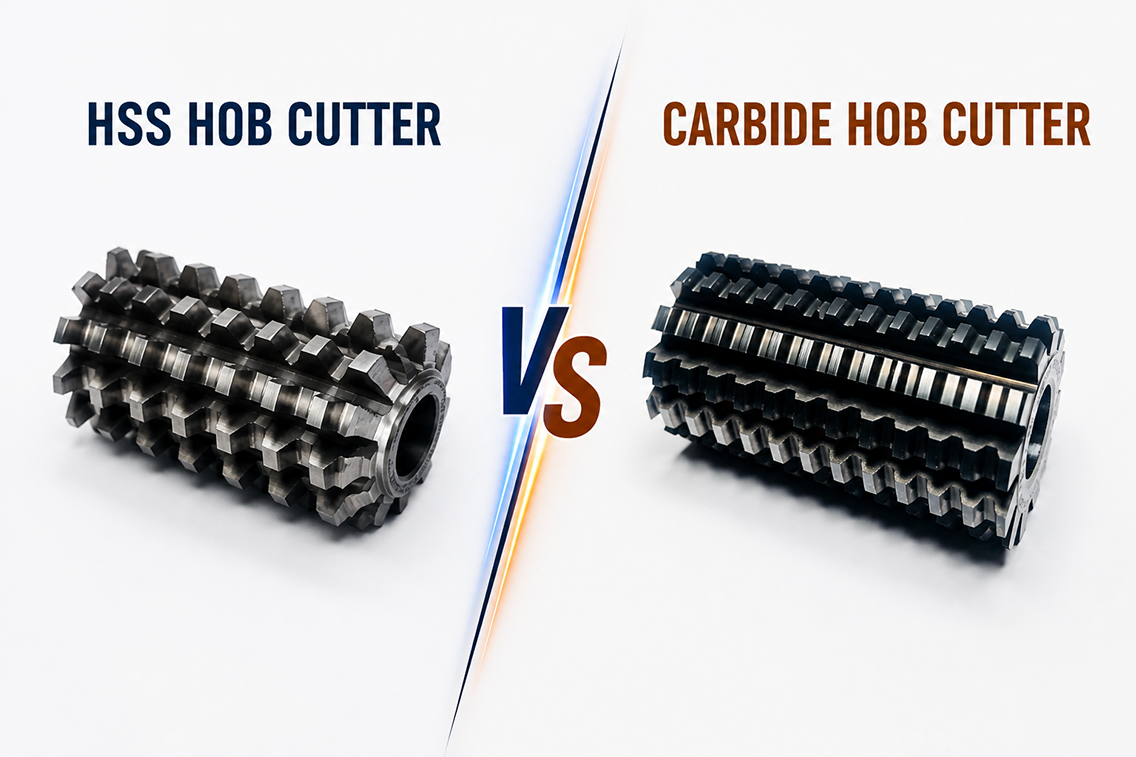
Introduction Selecting the right hob cutter material is critical to gear quality, productivity, and tooling cost. At Super Tools — a manufacturer and exporter of precision gear hob cutters — we help customers choose between high-speed steel (HSS) and carbide hobs based on part requirements, production volume, and machine capabilities. This guide explains differences, advantages, trade-offs, and practical selection criteria so you can pick the best hob for your application. Quick comparison
- HSS hobs: Tough, easier to regrind, lower initial cost, good for small- to medium-volume runs and soft-to-medium materials.
- Carbide hobs: Harder, run at higher speeds, longer life, better for hard or abrasive materials and high-volume production, higher upfront cost and more careful handling.
When to choose HSS
- Low-to-medium production volumes or frequent profile changes.
- Jobs where regrinding and reconditioning cost-savings matter.
- Cutting softer steels, non-ferrous alloys, and unhardened materials.
- Limited machine spindle speed or lower rigidity where carbide’s advantages can’t be fully exploited.
- Situations requiring rapid turnaround or small-batch customization.
When to choose carbide
- High-volume production runs where tool life and reduced downtime justify higher initial cost.
- Hardened steels, difficult-to-cut alloys, or abrasive materials that wear HSS quickly.
- Lightweight, high-speed hobbing with rigid machines and modern spindles.
- Applications requiring tight tolerances and consistent surface finish over long runs.
- Processes where reduced cycle time and predictable tool-change intervals are priorities.
Key factors to evaluate
- Production volume and run length: longer runs favor carbide.
- Workpiece material and hardness: harder/abrasive → carbide.
- Machine capability: high spindle speeds, rigidity, and coolant capacity favor carbide.
- Geometry and regrindability: complex or frequently changed profiles may favor HSS for easier regrind.
- Total cost of ownership: include purchase price, tool life, regrind costs, downtime, scrap, and part quality.
- Lead times and supply chain: consider availability and turnaround for custom hobs.
Coatings and treatments
- HSS: TiN/TiCN coatings can improve wear resistance and reduce built-up edge.
- Carbide: advanced PVD/CVD coatings (AlTiN, TiAlN, etc.) extend life and increase cutting speeds. Super Tools offers coated and uncoated options tailored to material and process needs.
Maintenance and lifecycle
- HSS: easier and cheaper to regrind; multiple resharpening cycles possible before replacement.
- Carbide: limited regrind cycles, handle carefully to avoid chipping; often replaced rather than reground for small index features. Both require correct storage, handling, and runout control to maximize life.
Practical examples
- Prototype/small batches of mild steel gears → HSS hob for low cost and easy regrind.
- Mass production of carburized gearbox gears → coated carbide hob to maximize throughput and consistency.
- Mixed production with frequent changeovers → HSS or modular approach using both materials as needed.
Cost comparison (high-level)
- Upfront: HSS << Carbide
- Tool life: Carbide >> HSS (often multiples depending on application)
- Regrind/repair costs: HSS cheaper and easier to regrind
- Overall TCO: Carbide often wins for large volumes; HSS often better for small runs or variable work.
How Super Tools helps
- Material and coating recommendations based on part drawings and production data.
- Custom hob design, precision manufacturing, and export-ready packaging.
- Support with regrind specs, tool holding recommendations, and post-sales service.
- Quick quotes and lead times for prototype to high-volume needs.
Conclusion and call to action Choosing between HSS and carbide hob cutters depends on your material, volume, machine capability, and cost goals. Super Tools combines engineering expertise with precision manufacturing to recommend and supply the right hob solution for your operation. Send us your gear drawings, material specs, and production volumes — our team will recommend the optimal hob material, geometry, and coating to minimize cost and maximize productivity. Contact Super Tools today for a free tooling consultation and quote.